

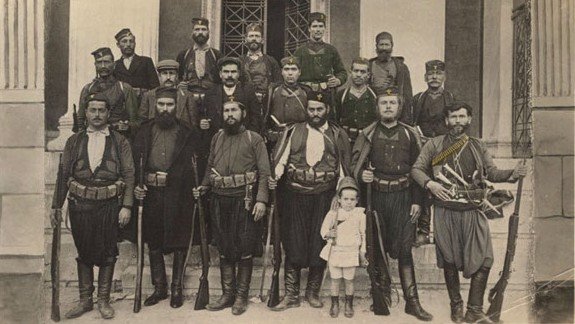
Newly uncovered historical material reveals that Cretan soldiers fighting in the Balkan Wars marked the New Year by singing specially adapted traditional carols on the front lines, offering a rare glimpse into how faith, tradition, and hope endured amid the hardships of war.
Verses composed by a volunteer soldier were sung by Cretan troops during Christmas 1912 and New Year 1913, echoing among tents, weapons, and trenches. The carols, which celebrate freedom and the liberation of Greece, remained unknown for 113 years before being discovered in the archive of Dimitrios Tsangarakis (1885–1967), a prominent primary school teacher from Thrapsano who fought in the Balkan Wars, was wounded, and later took part in World War I and the Asia Minor Campaign.
According to Dr Georgios A. Kalogerakis, a historian at the University of Ioannina, head of the Kastelli Primary School, and president of the Municipal Council of Minoa Pediada, the handwritten material is preserved today by Antonia Tavla, the granddaughter of Tsangarakis. While examining her grandfather’s personal archive, she identified two different versions of the New Year carols.
The records show that Cretan soldiers spent Christmas 1912 and New Year 1913 at the front, where they sang New Year carols using lyrics written by a volunteer soldier from Thrapsano. Tsangarakis documented the carols in the 1920s in two variants, but they had remained unknown until now.
Dr Kalogerakis said he was deeply moved to hear the carols brought back to life by sixth-grade pupils at Kastelli Primary School, who performed them this year for local authorities, reviving a piece of forgotten history.
Placing the discovery in its historical context, Dr Kalogerakis explained that Greece declared mobilisation in September 1912 ahead of the First Balkan War, which officially began in October. Crete also mobilised, with participation from men who had served in the Cretan Militia between 1907 and 1912.
Despite restrictions imposed by the Great Powers overseeing the Cretan State, who patrolled the island’s ports to prevent the departure of Cretan fighters, the soldiers boarded Greek ships at night and, with eventual tolerance from the major powers, reached Piraeus. The first Cretan troops arrived on 4 October 1912 and gradually formed the 1st Independent Regiment of Cretans. Due to organisational shortcomings, four companies initially took part in operations as the 1st Independent Cretan Battalion.
The battalion went on to make history by being the first to enter Thessaloniki and playing a decisive role in its liberation on 26 October 1912, under the command of Major Georgios Kolokotronis. The cost, however, was devastating. During the First Balkan War, the battalion suffered severe losses: its commander was killed, three of its four company commanders died in battle, and the fourth was wounded. Almost all officers were killed or injured, and of the roughly 1,000 men who served, only about 50 survived unscathed by the end of the fighting.
Dr Kalogerakis stressed that this discovery is not merely a piece of folklore, but a living testimony to how tradition, belief, and collective memory accompanied Cretan soldiers even in the darkest moments of war, offering comfort, honour, and hope for freedom.
The Greek Lyrics to the Cretan Christmas Carols Sung During the Balkan Wars 1912-1913
Άγιος Βασίλης έρχεται από τα νέα μέρη
που λευτερώθηκ’η Ελλάς με του Θεού το χέρι.
Κι αντί εικόνα και χαρτί που βάσταν’άλλους χρόνους
τώρα κρατεί τση λευτεριάς χρυσούς ανθούς και κλώνους.
Και στο δεξί χέρι κρατεί Ελληνική σημαία
Αη Βασίλη κάθισε να μας ε πεις τα νέα.
Στον τόπο όπου γύρισα κι όπου κι αν πήγα είδα
είχ΄η σκλαβιά τη λευτεριά δεμένη μ’αλυσίδα.
Είδα σκαμμένα χώματα και με μικρά πετράδια
μαύρους και φτωχικούς σταυρούς απάνω είχαν στημένα
κι ονόματα παλικαριών απάνω είχαν γραμμένα.
Κι άκουσε μέσα από τη γη χρυσέ μου Αη Βασίλη
αν ερωτήσουν ποιοι’μαστε οι χριστιανοί και φίλοι.
Που πέσαμε στον πόλεμο είμαστ’εδώ θαμμένα
να σώσωμε τ’αδέρφια μας που ήταν σκλαβωμένα.
Μα δεν παραπονούμαστε σε κείνους όπου ζούνε
μόνο τα ορφανά παιδιά πέστε μη λησμονούνε.
Γιατί΄ναι κρίμα κι άδικο τέτοιες άγιες ημέρες
για να πεινούν τα ορφανά οι χήρες κι οι μητέρες.
Του χρόνου να ξανάρθομε μ’υγεία να σας βρούμε
στο σπίτι σας χαρούμενοι πάλι να τραγουδούμε.
Πρωτοχρονιάτικα Κρητικά Κάλαντα- Βαλκανικοί Πόλεμοι 1912-1913 (Α)
Άγιος Βασίλης έρχεται από τα νέα μέρη
που λευτερώθηκ’ η Ελλάς με του Θεού το χέρι.
Κι αντί εικόνα και χαρτί που βάσταν’ άλλους χρόνους
τώρα κρατεί τση λευτεριάς χρυσούς ανθούς και κλώνους.
Και στο δεξί χέρι κρατεί Ελληνική σημαία
Αη Βασίλη κάθισε να μας ε πεις τα νέα.
Στον τόπο όπου γύρισα κι όπου κι αν πήγα κι είδα
είδα η σκλαβιά τη λευτεριά να δένει μ’ αλυσίδα.
Είδα σκαμμένα χώματα και με μικρά πετράδια
ονόματα παλικαριών εις τους σταυρούς γραμμμένα.
Κι άκουσα μέσα που τη γη χρυσέ Άγιε Βασίλη
αν σε ρωτήσουν ποιοι ’μαστε οι χριστιανοί και φίλοι.
Επέσαμε στον πόλεμο είμαστ’ εδώ θαμμένοι
και σώσαμε τους αδερφούς που ήταν σκλαβωμένοι.
Πέσαμε στη Τζουμαγιά, στο Μπέλλες στο Μπιζάνι.
Και περιμένομε τον καιρό που άγγελος τ’ Υψίστου
θα οδηγήση το στρατό στην πόλη την Αγία
και του Δεσπότη η φωνή ξεμιστική λατρεία.
Λοιπόν κι εσείς οι Χριστιανοί αν είναι ορισμός σας
βοηθάτε τα ορφανά παιδιά όλων των αδερφών σας.
Στο σπίτι όπου ήρθαμε πέτρα να μη ραΐσει
κι ο νοικοκύρης κι η κυρά χρόνια πολλά να ζήσει».

